Ball Valve OEM, ODM or Private Label?
Key Takeaway
OEM, ODM and private label differ in who owns the design and the tooling. The valve itself can be identical. Under OEM the drawing is yours and the factory builds to it. Under ODM the design is the factory’s, adapted to your service in the seat, the end connections or the marking. Under private label you buy a catalogue valve and it ships with your brand, packaging and documents. Two things apply to all three. If the body marking has to conform to MSS SP-25, it carries the manufacturer’s name, trademark or symbol, and how your brand sits alongside that is a question for the standard’s text. Third-party certification belongs to the company that applied for it. Selling under your own name means going through the certifier’s multiple listing procedure, and UL’s Multiple Listing covers only products identical to the certified one.
The same word, pointing both ways
Ask a valve factory who its OEM customers are and it will name the brands it builds for. Ask a brand who its OEM supplier is and it will name a factory. Both are using the word correctly. They are describing the two ends of one relationship, which is why an RFQ that says “we want an OEM ball valve” still leaves the factory guessing.
Private label and white label have the same problem. Some suppliers treat them as synonyms, others keep them apart. None of these terms has a standard definition.
Two questions work better. Who owns the design? Who owns the tooling? Both have clear answers, and both can be written into a contract.
How far each model lets you go
| Private label | ODM | OEM | |
|---|---|---|---|
| What you can change | Brand, packaging, documents | Seat material, end connections, handle, marking, sometimes port size | Anything on the drawing |
| New tooling | No | Only if the casting shape changes | Yes, unless the body already exists |
| What sets the MOQ | Packaging and labelling changeover | Machining setup, sometimes a full melt | Melt batches and tooling amortisation |
| What sets lead time | Stock and labelling | Machining programme, seat material delivery | Tooling, then the first pour |
| What you give the factory | Artwork and label spec | Service conditions | Controlled drawing with revision |
| Who controls design changes | Factory | Factory; you are told only if the contract says so | You |
| Exclusivity | Negotiated separately | Negotiable on the adapted parts | The drawing itself is yours |
The design change row is easy to skim past. Private label and ODM run on the factory’s design, so the factory can change a process or switch seat suppliers, and with nothing in the contract it has no duty to tell you. For a catalogue product that is fair. A factory cannot freeze its design for every private label customer. If your product is certified, or your own customers have approved the part number, put change notification in the contract.
What a change actually touches
Cost and lead time split here. It depends which layer the change lands in: marking, bill of materials, machining or the casting.
| Change | What it touches | Model |
|---|---|---|
| Brand (laser mark, tag, printed handle) | No tooling, no change to the machining programme | Private label |
| Seat or seal material | One line on the BOM; a grade new to the factory adds a supplier approval | ODM |
| Thread form (e.g. NPT to BSPT) | Machining programme and thread gauges; the casting stays the same | ODM |
| Port size | Machining and fixtures, possibly the ball and seats too | ODM |
| Brand cast into the body | Tooling modification | ODM or OEM |
| Body shape | New tooling, new gating, first article inspection repeated | OEM |
The last row is the dividing line. Once the body shape changes, the programme is OEM and the tooling sets the schedule from then on. What drives tooling lead time also drives the minimum order, covered in why an OEM ball valve carries a minimum order quantity. Why casting a brand into the body counts as a tooling change too, and who owns the tool once it has been modified, is in who owns the tooling in a private label valve programme.
The marking on the body
If the order or product standard calls for marking to ANSI/MSS SP-25, the body carries the manufacturer’s name, trademark or symbol, unless the size or shape of the product does not permit it. It also carries material, pressure rating and nominal size, with thread identification where relevant. A heat number is required only where the product or material specification calls for one, so a small threaded valve may have none.
On a private label programme the real question is whether your own trademark counts. The 2018 edition of SP-25 revised its guidance on marking names, trademarks, logos and symbols, and that wording is in the full text of the standard. To answer it, read the clause in the edition your order names. Don’t rely on a summary, this one included.
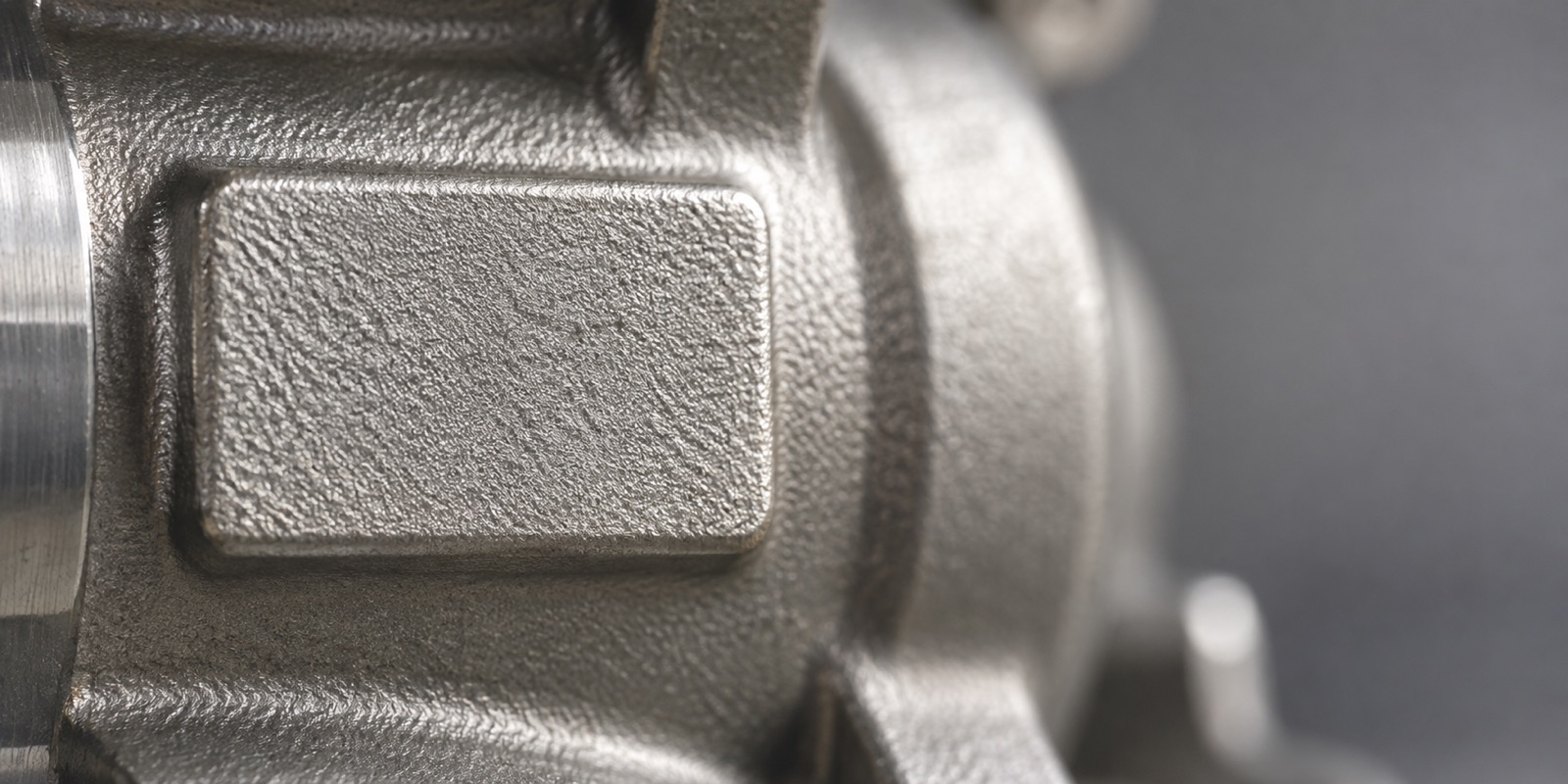
Then there is space. The marking pad on a casting is designed when the tooling is made, and an OEM programme can put the brand there at that stage. Private label and ODM use an existing body whose pad already carries the factory’s mark. Without a tooling change, that leaves a laser mark, a tag or the handle.
Certification follows the applicant
Third-party certifications such as UL or CSA belong to the company that applied for them. They cover a specific product made at a specific location. Put a different brand on the shipment and the certification stays where it was.
Certifiers have a procedure for this. UL calls it Multiple Listing. When a certified product is sold under another company’s brand, that company becomes the multiple listee, gets its own file number and appears in UL’s online certification directory, where nothing shows who the original applicant was. Intertek has a multiple listee agreement for ETL as well. The names and conditions differ from one body to the next.
Two things to watch. Both parties have to apply, and writing private label on a purchase order does not set it up. UL’s Multiple Listing also covers products identical to the certified one. Once an ODM programme has changed the seat material or the end connections, whether the valve still counts as identical is the certifier’s call. Neither the factory nor the buyer can settle it.
Check this before the order goes in. What a certificate actually covers, and how to verify it, is set out in what a valve manufacturer’s certification actually proves.
Material certificates work the same way. An EN 10204 3.1 certificate is issued by the manufacturer and validated by its authorised inspection representative, who is independent of the manufacturing department. The name on it is the manufacturer’s. Private label can change the packaging. It can’t change this document.
What to send with the RFQ
| Model | What the factory needs from you |
|---|---|
| Private label | Catalogue part number, vector artwork, label and carton spec, marking position, document language |
| ODM | Service conditions: media, pressure, temperature, cycling frequency, end connections, required certifications, target market |
| OEM | Controlled drawing with revision, material specification, acceptance test standard and edition, marking layout, tooling ownership |
The ODM row saves the most time and is the easiest to leave out. Send only a competitor’s part number and the factory has to work backwards to the service conditions, so the quote comes back resting on assumptions. State the media, pressure, temperature and cycling frequency, and a factory with a close platform can match it straight away.
Real programmes straddle two models
The three terms describe ownership well. As a description of a programme in progress they are less precise.
Take a typical case. The body and ball are catalogue parts, with design and tooling owned by the factory. The buyer specifies the seat material for the service. The ends are machined to the buyer’s thread form. Marking, packaging and documents are the buyer’s. Commercially it goes by private label. By ownership it is ODM. The difference shows when the factory wants to change the body and the buyer finds out whether it has a say.
Programmes move, too. A buyer tests a market on private label. Volume grows, and the buyer starts specifying seats and dedicated machining. Eventually the volume justifies a dedicated body. The programme has been in all three positions and kept the same name throughout.
Leave tooling ownership and exclusivity until the last of those transitions and the model is already on the buyer’s own price list. That is when there is the least room to negotiate. At each phase change, write down four things: which parts are catalogue, which are specified, who pays for new tooling, and whether changes must be notified.
Five questions before the RFQ goes out
- Do you have a drawing you control, or a requirement? A drawing points to OEM, a requirement to ODM.
- Does the body shape have to change? If an existing body meets the service, it isn’t an OEM programme, whatever the purchase order says.
- Who pays for the tooling, and who owns it afterwards? Put it in writing before the tool is made.
- Which certifications does the target market require, and who holds them? If the factory holds them, start the multiple listing process now.
- Do you need to know when the factory changes something? If so, write it into the contract.
What the right model still leaves open
- Owning a drawing doesn’t give you somewhere to build it. An OEM drawing needs a factory whose casting, machining range and test capacity all fit.
- Owning the tooling isn’t owning the process. The same tool at another foundry makes a different casting. Which first articles have to be redone is covered in what has to be re-qualified when the supplier changes.
- An exclusive drawing is not an exclusive design. A three-piece stainless ball valve is not new geometry. The drawing protects your part. It does not protect the idea.
- With your brand on the body, yours is the first name the market looks for when a valve fails. Keep your own copy of the test records instead of leaving them only in the factory’s files.
Frequently Asked Questions
Related Articles
- Stainless Steel Ball Valve OEM Manufacturer in Taiwan: Range, Capacity and Certifications
- Who Owns the Tooling in a Private Label Valve Programme?
- Why Does an OEM Ball Valve Carry a Minimum Order Quantity?
- What Does a Valve Manufacturer’s Certification Actually Prove?
- Changing Valve Supplier: What Has to Be Re-Qualified
- Sourcing Ball Valves from Taiwan: What Differs Between Factories, and How to Check
Referenced standards: ANSI/MSS SP-25 (standard marking system for valves, fittings, flanges and unions, 2018 edition), EN 10204 (types of inspection document), and the UL Multiple Listing Service description.
Marking requirements are quoted from ANSI/MSS SP-25 as published by the Manufacturers Standardization Society. Certification body procedures vary, and the multiple listing route described here follows UL’s published service description and terms; confirm the equivalent process with the body that holds the listing you intend to rely on. The terms private label and white label are not defined by any standard cited here and are used inconsistently across suppliers.