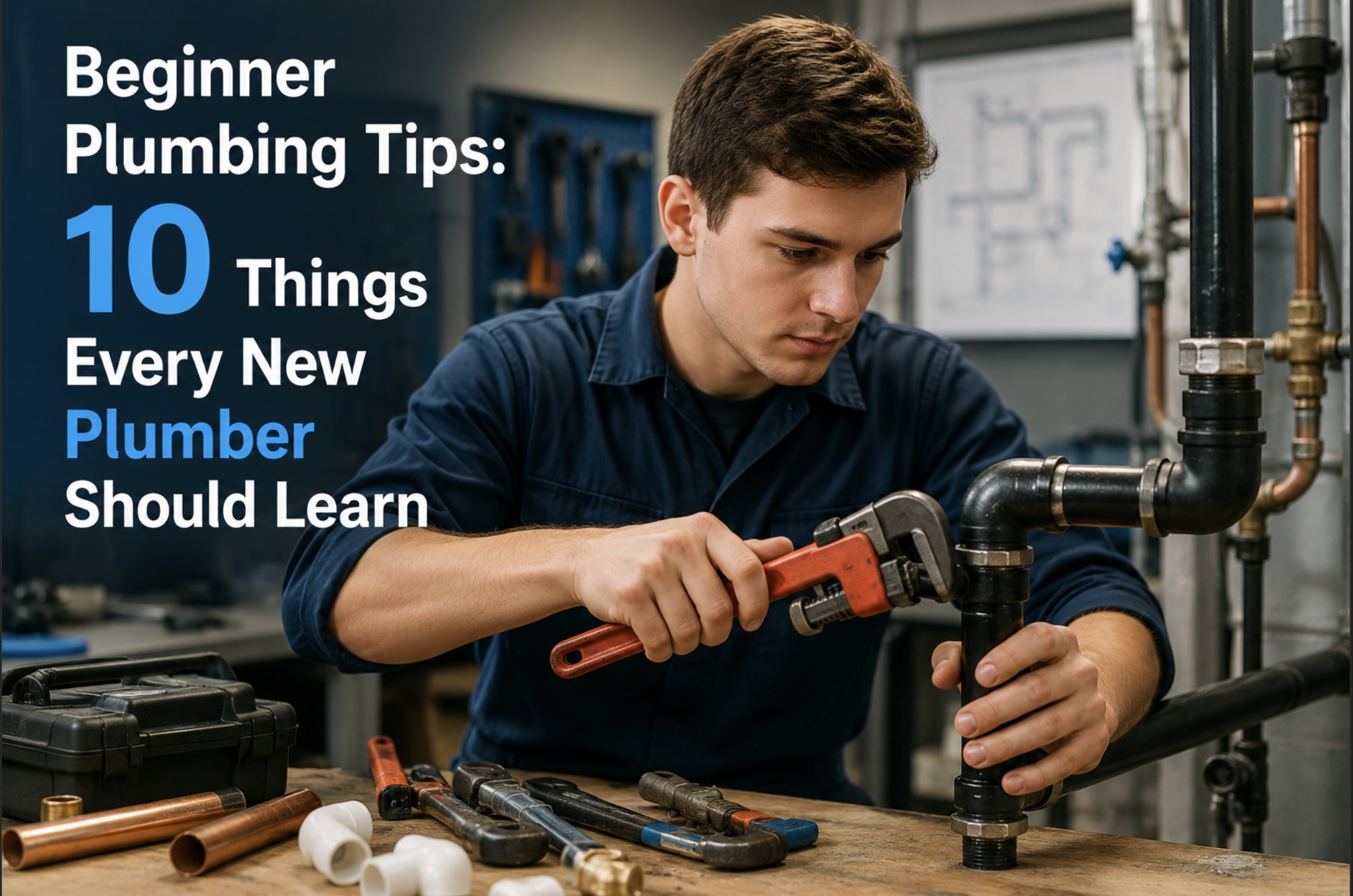
Beginner Plumbing Tips: 10 Things Every New Plumber Should Learn
Quick Summary
Starting a plumbing career? Learn these 10 fundamentals first: always shut off the water, know your pipe types (PEX, copper, PVC, CPVC), don't overtighten fittings, understand water pressure, fix small leaks early, learn how drains work, spot hidden problems, focus on problem solving, prioritize safety over speed, and never stop learning.
Starting a plumbing career can feel overwhelming at first.
There are pipes, fittings, valves, water pressure issues, leaks, tools, and repair methods to learn all at once.
Most beginner plumbers focus on learning installations quickly. But experienced plumbers know that plumbing is really about understanding systems, preventing problems, and working carefully.
Here are 10 important plumbing basics every new plumber should learn early.
1 Always Shut Off the Water First
Before repairing or replacing anything, make sure the water supply is turned off properly.
It sounds simple, but many beginner plumbers learn this lesson the hard way.
Knowing where shut-off valves are located is one of the most basic plumbing skills.
2 Learn the Difference Between Pipe Types
Different plumbing systems use different materials. Common pipe types include:
- PEX — flexible, easy to install, resistant to scale
- Copper — durable, long lifespan, used in hot and cold lines
- PVC — lightweight, used for drain and waste lines
- CPVC — handles higher temperatures than PVC
Each material has different strengths, pressure ratings, and installation methods. Understanding pipe types is essential for safe and reliable plumbing work.
3 Don't Overtighten Fittings
Many beginners think tighter always means better.
But overtightening can:
- Damage threads
- Crack fittings
- Create leaks later
Good plumbers learn how to tighten fittings correctly without forcing them.
4 Water Pressure Matters
Water pressure affects almost every plumbing system.
Pressure that is too high can damage:
- Valves
- Faucets
- Water heaters
- Pipes
Pressure problems are also a common cause of leaks and inconsistent water flow.
5 Small Leaks Become Big Problems
A tiny leak may not seem serious at first.
But over time, even small leaks can lead to:
- Mold
- Water damage
- Corrosion
- Expensive repairs
Good plumbers fix problems early before they become larger issues.
6 Drain Problems Usually Build Slowly
Most clogged drains happen gradually.
Grease, soap, hair, and debris slowly collect inside pipes over time.
Understanding how drain systems work helps plumbers diagnose problems more efficiently.
7 Learn How to Spot Hidden Plumbing Problems
Some plumbing issues are obvious. Others stay hidden behind walls or under floors.
Warning signs may include:
- Low water pressure
- Water stains
- Unusual sounds
- Musty smells
- Higher water bills
Good plumbers learn how to identify problems before major damage happens.
8 Plumbing Is About Problem Solving
Not every issue has an obvious answer.
Sometimes the visible problem is only a symptom of a larger issue deeper in the system.
Experienced plumbers focus on finding the real cause instead of only treating the symptom.
9 Safety Matters More Than Speed
Rushing often creates mistakes.
Beginner plumbers should always pay attention to:
- Proper tools
- Water pressure
- Hot water systems
- Electrical hazards
- Safe working conditions
Working carefully is more important than working fast.
10 Keep Learning
Plumbing systems continue evolving.
New materials, valves, tools, and building standards appear every year.
The best plumbers never stop learning and improving their skills.
Frequently Asked Questions
Final Thoughts
Every experienced plumber started as a beginner.
Learning the basics early helps prevent mistakes, improves problem-solving skills, and builds confidence over time.
Good plumbing is not only about fixing pipes. It's about understanding how the entire system works together.