How to Fix a Running Toilet
Quick Summary
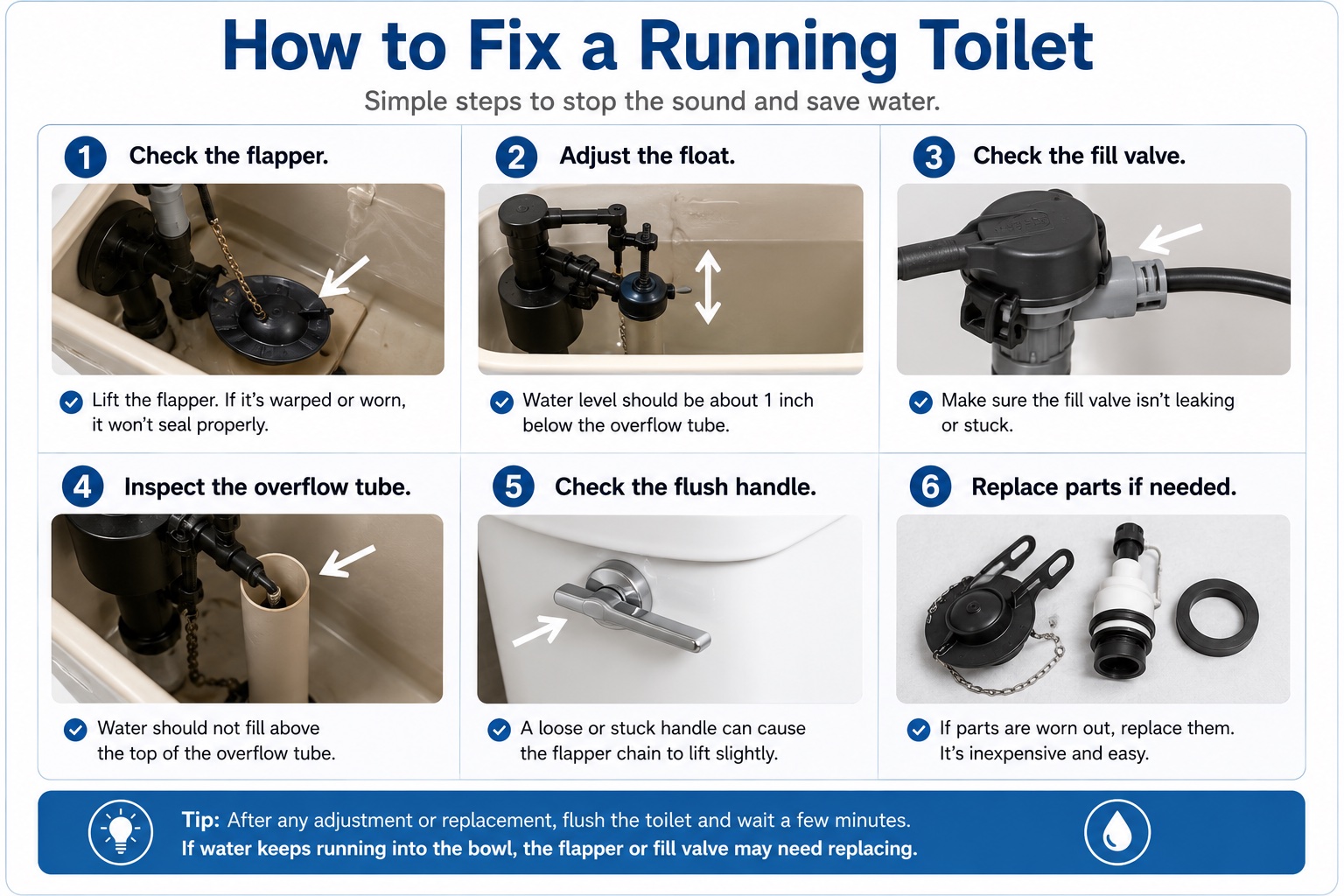
A running toilet is usually caused by a worn flapper, incorrect water level, or faulty fill valve. Check these 6 things: the flapper seal, float height, fill valve, overflow tube, flush handle and chain, and worn parts. Most fixes take under an hour and cost very little. A running toilet can waste hundreds of gallons per day — fix it early to save water and money.
A running toilet is one of the most common plumbing problems in any home.
Sometimes you hear water running constantly. Sometimes the toilet randomly refills by itself. Other times, the sound is quiet enough that you barely notice it.
But even a small running toilet can waste a large amount of water over time and slowly increase your water bill.
The good news is that most running toilet problems are surprisingly simple to fix.
Why Does a Toilet Keep Running?
Inside the toilet tank are a few important parts working together:
- Flapper — rubber seal at the bottom of the tank
- Float — controls the water level
- Fill valve — controls how water enters the tank
- Flush handle — lifts the flapper via a chain
- Overflow tube — prevents the tank from overflowing
When one of these parts stops working properly, water keeps flowing into the bowl instead of shutting off normally. That's usually why a toilet keeps running after flushing.
1 Check the Flapper
The flapper is the rubber seal at the bottom of the tank.
After flushing, it should close tightly and stop water from leaking into the bowl.
Over time, the flapper can:
- Warp
- Crack
- Wear out
- Become dirty
When that happens, the toilet may continue running constantly. In many cases, replacing the flapper is the easiest fix.
2 Adjust the Float
The float controls the water level inside the tank.
If the water level is too high, water flows into the overflow tube continuously, causing the toilet to keep running.
Most toilets allow simple float adjustments using a screw or clip. A small adjustment is often enough to solve the problem.
3 Inspect the Fill Valve
The fill valve controls how water enters the tank after flushing.
Over time, mineral buildup or worn parts can cause the valve to:
- Stick
- Leak
- Refill continuously
- Fail to shut off properly
If your toilet won't stop running, the fill valve may need cleaning or replacement.
4 Check the Overflow Tube
The overflow tube prevents the toilet tank from overflowing.
But if the water level rises above the tube, water will constantly drain into it. That creates a nonstop running sound.
The water level should normally sit about 1 inch below the top of the overflow tube.
5 Inspect the Flush Handle and Chain
Sometimes the problem is surprisingly simple.
A loose handle or tangled chain may keep the flapper slightly open. Even a small gap can allow water to leak continuously into the bowl.
Make sure:
- The chain isn't too tight
- The handle moves freely
- The flapper closes completely after flushing
6 Replace Worn Toilet Parts
Toilet components naturally wear out over time.
If your toilet is older, replacing parts like:
- The flapper
- Fill valve
- Float assembly
- Handle chain
can often solve the issue completely. Most replacement parts are affordable and available at hardware stores.
Don't Ignore a Running Toilet
Many people ignore the issue because the toilet still "works."
But a toilet running constantly can waste hundreds or even thousands of gallons of water over time. That means:
- Higher water bills
- Unnecessary water waste
- Extra wear on plumbing components
Fixing the issue early is usually simple and inexpensive.
Frequently Asked Questions
Final Thoughts
A running toilet may seem like a small problem, but ignoring it can waste a large amount of water over time.
Fortunately, most causes are easy to identify and relatively simple to fix. Usually, the issue comes down to a worn flapper, incorrect water level, or a faulty fill valve.
A quick inspection today can save water, money, and frustration later.