6 Easy Ways to Fix a Clogged Drain
Quick Summary
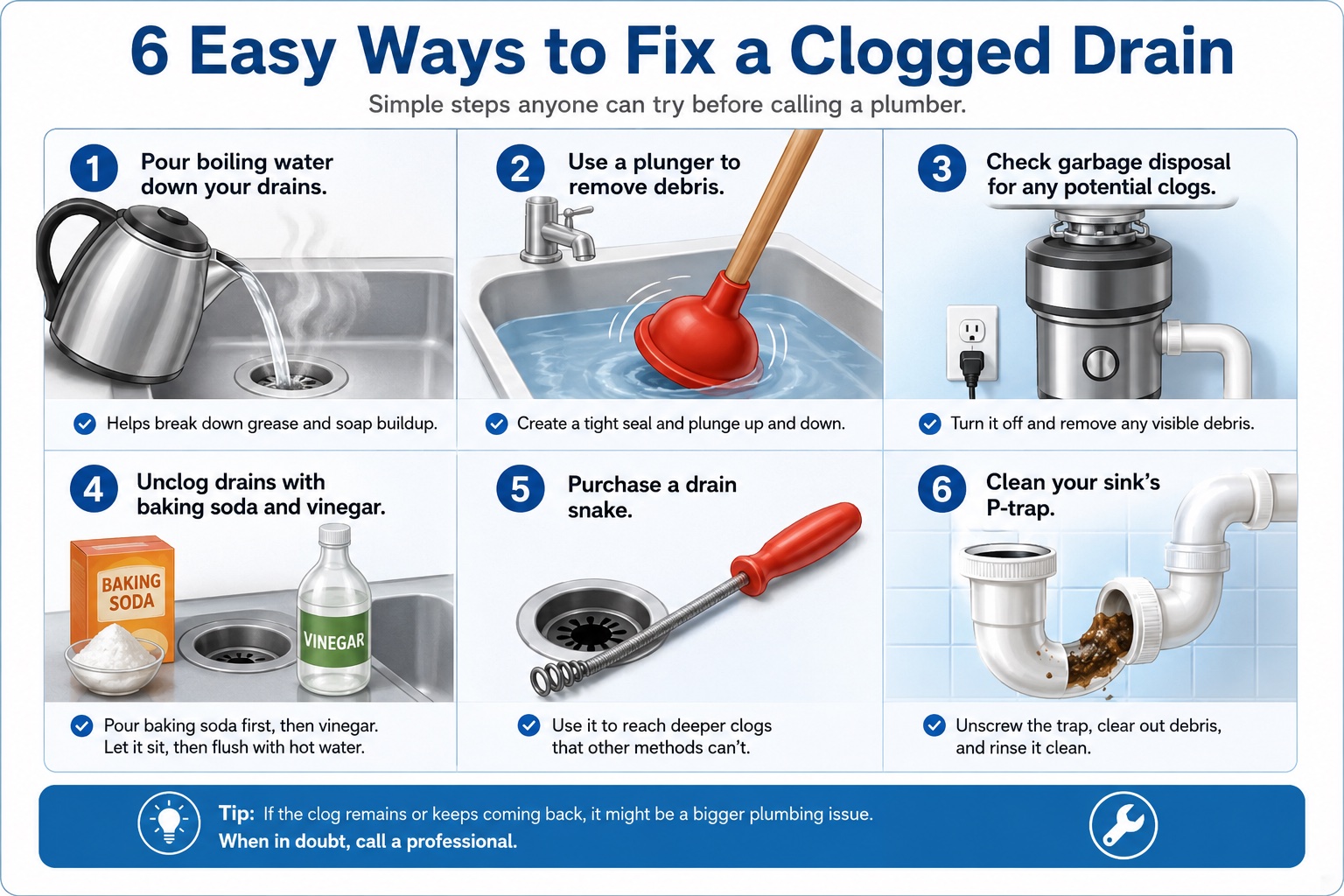
A clogged drain doesn't always need a plumber. Try these 6 methods first: boiling water for grease, a plunger for debris, check the garbage disposal, baking soda & vinegar for mild buildup, a drain snake for deeper clogs, or clean the P-trap under your sink. If multiple drains are clogged or water keeps backing up, it's time to call a professional.
Is Your Sink Draining Slowly?
A clogged drain usually starts small.
Maybe the water drains a little slower than usual. Maybe there's a strange smell coming from the sink. Or maybe one day the water suddenly won't go down at all.
Before calling a plumber, there are a few simple things you can try at home. Most minor drain clogs are caused by:
- Grease buildup
- Food debris
- Hair
- Soap residue
- Small objects stuck in the pipe
Here are 6 easy ways to unclog your drain without making things complicated.
1 Pour Boiling Water Down the Drain
For kitchen sinks, grease is often the main problem.
Boiling water can help melt light grease buildup inside the pipe and improve water flow.
2 Use a Plunger
A plunger creates pressure that can loosen debris trapped near the drain opening.
This works especially well for:
- Bathroom sinks
- Kitchen sinks
- Shower drains
3 Check the Garbage Disposal
If your kitchen sink has a garbage disposal, the clog could be inside the unit.
Sometimes food scraps or grease block the blades or drainage path.
Before checking:
- Turn off the power
- Never place your hand inside the disposal
- Use a flashlight to inspect the inside safely
4 Try Baking Soda and Vinegar
This classic DIY method can help loosen mild buildup and reduce odors.
Simple steps:
- Pour baking soda into the drain
- Add vinegar slowly
- Let it sit for 10–15 minutes
- Flush with hot water
It won't solve every clog, but it's useful for regular maintenance.
5 Use a Drain Snake
For deeper clogs, a drain snake can help pull out hair, grease, or trapped debris.
Small handheld drain snakes are inexpensive and easy to use for home maintenance.
Works well for:
- Hair clogs
- Bathroom sinks
- Shower drains
6 Clean the P-Trap
The P-trap is the curved pipe under your sink. It holds water to block sewer gases from entering your home.
This area often collects grease, soap, food particles, and debris over time.
If none of the earlier methods work, cleaning the P-trap may solve the problem.
Before removing it:
- Place a bucket underneath to catch water
- Wear gloves
- Check for trapped debris carefully
When Should You Call a Plumber?
If the drain keeps clogging repeatedly, the issue may be deeper inside the plumbing system.
You may need professional help if:
- Multiple drains are clogged at the same time
- Water backs up frequently
- You hear gurgling sounds from the pipes
- There's a sewage smell
- DIY methods stop working
These signs could indicate a larger blockage in the main drain line.
Final Thoughts
Most clogged drains start as small problems. Fixing them early can help prevent larger plumbing repairs later.
Simple maintenance, regular cleaning, and avoiding grease buildup can keep your drains flowing properly.
Sometimes a quick fix is enough. Sometimes it's a sign of a bigger plumbing issue. The important thing is catching it before it gets worse.